
If you're a homeowner in Dallas-Fort Worth, you know how crucial a reliable furnace is for those chilly Texas winter nights. You might be familiar with the main components—the thermostat, the heat exchanger, the blower motor—but have you ever looked at your furnace and wondered, “What’s that drain pan for?”
It's a common question, and the answer is a little surprising. It all has to do with a modern marvel of engineering: the high-efficiency gas furnace. Unlike older furnaces, these systems are designed to squeeze every last bit of heat out of the gas they burn, and that process creates something unexpected: water. Understanding why this happens and what those drain pans do can give you peace of mind and help you protect your home.
Concerned about water near your furnace? Don't wait—contact our team for immediate assistance by calling (972) 201-3253.
The Science Behind a High-Efficiency Furnace
To understand the drain pan, you first need to understand what makes a high-efficiency furnace so…well, efficient. Older, less-efficient furnaces would release a lot of hot gas and air through the exhaust vent, wasting a significant amount of heat. Modern high-efficiency furnaces capture and reuse much of that heat. They do this by having a second heat exchanger, which pulls even more heat out of the combustion gases before they exit your home.
This process is a bit like what happens with a drink in a cold glass on a hot day. The cold glass makes the air around it cool down, and as it cools, the moisture in the air condenses and forms water droplets on the outside of the glass. In a high-efficiency furnace, the exhaust gases cool down so much in the second heat exchanger that the water vapor within them turns into liquid. This liquid is known as condensate, and it’s a natural byproduct of the heating process. This is where the drain pan comes in.
The Primary Drain Pan: Your Furnace's First Line of Defense
Every high-efficiency gas furnace is equipped with a primary drain pan. This pan is designed to collect all that condensate created during the heating process. A PVC pipe, known as the primary drain line, is connected to this pan, and it carries the water away from the unit, usually to a floor drain or a small pump.
This system works great as long as everything is flowing smoothly. However, like any drain, the primary drain line can get clogged. Algae and other gunk can build up over time and create a blockage. When that happens, the condensate has nowhere to go, and the primary drain pan can start to fill up and overflow. This is where an additional layer of protection becomes critical, especially if your furnace is located in a place like an attic.
The Secondary (Emergency) Drain Pan: The Unsung Hero
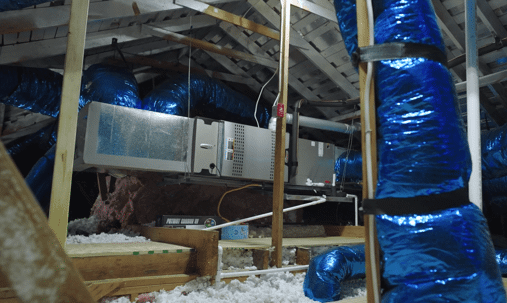
Here in the DFW area, it's very common to have your furnace located in your attic. This is a great space-saver, but it also creates a significant risk. An overflowing primary drain pan in an attic could lead to a very messy and expensive problem: a water-damaged ceiling. To prevent this, our team at Rescue Air and Plumbing always installs a secondary drain pan underneath the entire furnace unit during installation.
This secondary pan, also known as an emergency drain pan, is your home’s backup plan. It’s a large, flat pan that sits directly under the furnace. If the primary drain pan overflows, the secondary pan is there to catch the water. This prevents a potential flood and significant damage to your ceiling, drywall, and other parts of your home below the unit.
The secondary drain pan is typically connected to its own drain line, which often leads to a visible location, like a window or a pipe that runs outside. This is a great feature because if you ever see water dripping out of this emergency drain line, you know something is wrong. It's a clear signal that your primary drain line is clogged and needs immediate attention before it causes an even bigger problem.
The Float Switch: Your Automatic Safety Net
For even greater peace of mind, our team can install a device called a float switch. This little device is placed in the emergency drain pan. If the water level in the pan rises due to a clog, the float switch is designed to do one crucial thing: it turns your furnace off automatically.
This is a very important safety feature because it prevents more water from being produced by the furnace, stopping the overflow before it can cause damage. The furnace will remain off until the issue is resolved and the water is cleared from the pan. It's an extra layer of protection that can save you from a major headache and a costly repair bill. It's just one of the things we do to make sure you have a reliable and safe heating system.
In Summary: A System of Safeguards
So, why does your high-efficiency furnace have a drain pan? In short, it's a critical component that manages the water created during the modern heating process.
- Primary Drain Pan: The first line of defense, collecting and draining away the condensate.
- Secondary (Emergency) Drain Pan: The backup plan, installed under the unit to catch any overflow from a clogged primary drain line and prevent ceiling damage.
- Float Switch: An optional but highly recommended safety device that automatically shuts off the furnace if water levels get too high.
Each of these components works together to ensure your furnace operates safely and efficiently, protecting your home from unexpected water damage.
Get Fast, Reliable Help: Dallas Furnace Repairs
If you have questions about your furnace or if you notice any signs of a problem, it's always best to call a professional. At Rescue Air and Plumbing, our team is here to help keep your heating system running safely and efficiently all winter long.
Contact us through our online contact form or by calling us at (972) 201-3253.